


Renovating a property in Spain while living in another country may seem complicated at first. You may not know any local contractors, may not be able to visit the property often, or may not be able to speak directly with all the professionals involved. However, the distance doesn’t have to mean losing control of the project.
With clear planning, constant communication, and a trusted local team, you can make important decisions from your home country while your property on the Costa del Sol takes shape. Whether you’re renovating a villa in Marbella, a penthouse in Estepona, or a second home in Sotogrande, the key is to define how the project will be managed before you begin.
Start with a clear renovation briefing
A well-defined briefing ensures that everyone involved shares the same vision for the project. Before contacting designers or suppliers, it’s a good idea to think about how you want to use the home and which changes are a priority for you.
It’s helpful to prepare:
- Photos, videos, and floor plans of the property.
- The rooms you want to renovate.
- Your functional priorities and storage needs.
- Images that reflect the style you’re looking for.
- Existing materials or elements that you would like to keep.
- An approximate budget and a target date.
- The times of year when you’ll be using the home.
Renovating a second home may involve different needs than those of a primary residence. You may need more space for guests, practical solutions for storing seasonal items, or materials that are easy to maintain when the house is unoccupied. Sharing this information from the start ensures that the design truly reflects how you plan to enjoy the home.
Choose a local team you can trust
When you’re managing a property renovation on the Costa del Sol from another country, choosing the right team is especially important. You’re not just looking for an attractive design. You need professionals who communicate clearly, know the area, and take responsibility for every phase they manage.
Before hiring a company, review its completed projects, testimonials from other clients, and its experience with properties similar to yours. Ask who your main point of contact will be and whether the same team will handle the design, measurements, manufacturing, and installation.
Working with a team that communicates in English, such as the one at Kubic Design Solutions, can eliminate a lot of friction for international homeowners. However, sharing a common language is only part of the solution. The company must also be able to clearly explain technical decisions, document changes, and provide you with an honest assessment of what can be achieved given the space, budget, and timeline.
Define how the project will be managed from abroad
Managing a renovation of your property in Spain from a distance works best when responsibilities and communication routines are agreed upon before the project begins.
You should know:
- Who will be in charge of coordinating the work?
- How often will you receive updates on progress?
- Which decisions require your approval?
- How will the changes be documented?
- What will happen if something unexpected comes up?
- Which professionals will be involved in each phase?
- How the schedule and budget will be managed.
Regular video calls, photos, videos, and written updates allow you to track progress without having to travel constantly. Renderings and technical drawings also help you understand the proposed layout before beginning the production of custom furniture and the construction work.
Having a single point of contact is particularly valuable. Instead of having to chase down multiple vendors, you have one person who understands the big picture and can coordinate all decisions related to it.
Approve the design and materials remotely
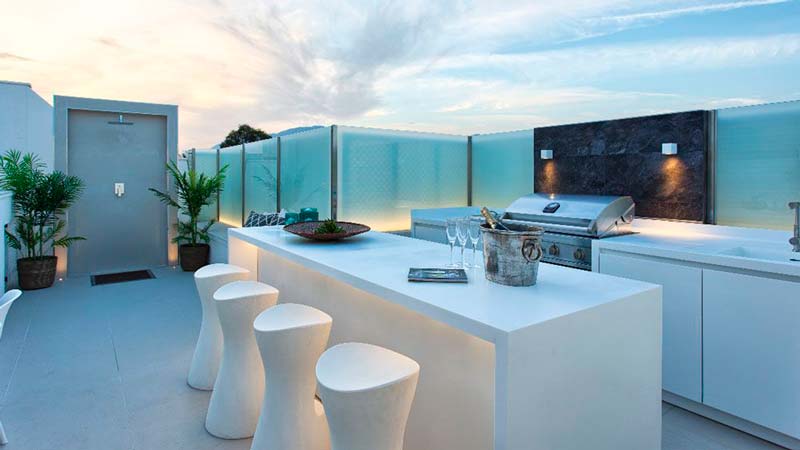
Many design decisions can be made from abroad when the process is well organized. The layout, storage solutions, lighting fixtures, and custom furniture can be reviewed using floor plans, renderings, and video calls.
Selecting materials requires a bit more care. Color, texture, and sheen can vary depending on the lighting, so it’s a good idea to supplement photographs with physical samples whenever possible. At Kubic Design Solutions, we recommend reviewing these samples during a scheduled visit to the Costa del Sol.
In a custom kitchen or built-in cabinetry project, decisions may include:
- Furniture finishes and colors.
- Natural stone or porcelain tile surfaces.
- Handles and interior accessories.
- Appliance Specifications.
- Built-in lighting.
- Customized storage solutions.
- Details in wood, lacquer, or metal.
The goal is not just to choose attractive materials, but to create a design that is consistent with the architecture, natural light, and character of the home.
Coordinates design, manufacturing, and installation
One of the most common risks in a renovation is a lack of coordination among those who design the space, prepare the home, manufacture the furniture, and carry out the installation.
A change made during construction may affect the measurements. Waiting too long to choose an appliance may require changes to the furniture. A delay in receiving materials can disrupt the installation schedule. These problems are even more difficult to resolve when the owner is in another country.
That’s why an integrated process offers greater control. At Kubic Design Solutions, we combine design, custom manufacturing, and installation within a single project. Kitchens and furniture are created based on the exact measurements of the space, rather than being adapted to standard catalog modules.
In addition, we assemble and inspect each kitchen in our workshop before delivering it to the home. This allows us to verify measurements, alignments, and finishes in advance, and reduce the risk of unforeseen issues during the final installation.
Plan your must-see visits to the Costa del Sol
It’s possible to manage much of the renovation remotely, but a few well-planned visits can make the process more personal and efficient.
Depending on the scope of the project, some good times to travel might be:
- The initial meeting and the visit to the property or showroom.
- Final approval of the materials.
- Inspection or handover of the completed project.
Not all property owners need to make the same number of visits. A custom kitchen and furniture project for other rooms (bathroom, bedroom, or living room) can be completed with fewer trips than a more extensive renovation involving multiple rooms and outside professionals.
The key is to identify in advance which moments add real value, rather than having to travel back and forth to resolve issues that could have been anticipated.
Keep track of the budget, changes, and deadlines
A clear proposal should explain what the project includes, what is outside its scope, and what decisions could affect the final investment.
To maintain control from abroad, request:
- A detailed and well-organized budget.
- A clearly defined scope of work.
- An approval process for additional work.
- A timeline for design, manufacturing, and installation.
- Early confirmation of appliances and special materials.
- A written record of any agreed-upon changes.
Custom projects require time for design, material selection, and fabrication. Trying to rush these phases can lead to mistakes that will ultimately cause further delays. The schedule should also take into account supplier lead times and the dates when you plan to move into the home.
Tailor the renovation to your property on the Costa del Sol
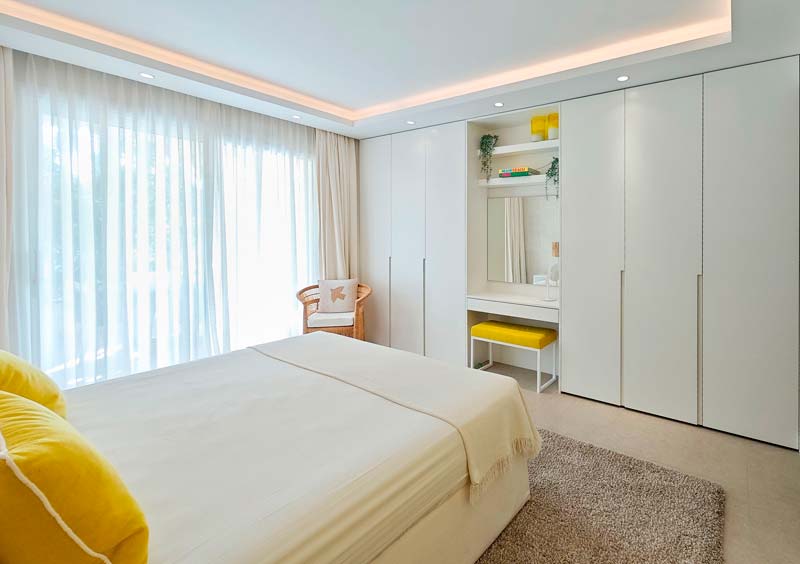
A well-planned renovation should be tailored to the home and its surroundings, rather than simply following an international trend.
Villas in Benahavís typically feature spacious interiors, large gardens, and a strong connection to the surrounding landscape. Homes in Marbella may prioritize open spaces and areas designed for entertaining guests. Penthouses in Estepona typically require a seamless transition between the interior and a large terrace, while many properties in Sotogrande are used seasonally and must be suitable for both family life and hosting guests.
The coastal climate also influences certain decisions. The intensity of the sun, humidity, proximity to the sea, and the long periods during which a second home may remain unoccupied all affect the choice of finishes, hardware, and exterior materials.
Understanding these conditions makes it possible to create elegant, durable interiors that are tailored to the lifestyle of homes on the Costa del Sol.
Renovate Your Home on the Costa del Sol with Confidence
Living in another country shouldn’t prevent you from actively participating in the renovation of your property. With a well-structured process, clear communication, and a team that takes responsibility for every detail, you can closely monitor the project without having to be physically present during every phase.
At Kubic Design Solutions, we work with international homeowners throughout the Costa del Sol, combining design, custom fabrication, and installation. From a new kitchen or custom storage solutions to a more extensive interior renovation, we guide each project from the initial consultation through to final installation.